
In the world of aged spirits, the barrel is not merely a vessel – it is an active creator of flavour. It can even be said that the distillate entering the barrel is only the beginning of the story. It is the wood that gives it character, structure, and depth, while also significantly determining its final price.
Freshly distilled alcohol is usually raw, sharp, and colourless. It is only during the ageing process that it begins to transform into a complex spirit. The alcohol penetrates the wood and then back out, extracting aromatic compounds such as vanillin, lactones, and tannins. At the same time, oxygen enters through the micro-pores of the barrel, mellowing the sharpness and allowing the components to integrate. This slow „breathing” of the barrel is what eventually creates something far more harmonious than the original distillate.
Oak – the foundation of alcohol ageing
Before we move on to less obvious types of wood, it's worth dwelling on oak, which for centuries has remained the absolute cornerstone in the world of aged spirits. Its uniqueness stems from a perfect balance between porosity and tightness – it allows the spirit to „breathe” while simultaneously preventing excessive loss.
Oak is also rich in chemical compounds that directly shape the profile of the spirit. It is from oak that the characteristic notes of vanilla, caramel, spices, or coconut originate. What's more, oak wood is relatively easy to work with and very durable, meaning barrels can be used multiple times while retaining their properties.
In practice, we most often encounter two main types:
• American oak (Quercus alba), which imparts notes of vanilla, coconut, and sweetness
• European oak (Quercus robur/petraea), which will be responsible for dried fruit aromas, a distinctive spiciness, and tannins
It is precisely the differences between them that are one of the foundations of the style of many spirits – from bourbon to Scotch whisky.
Not just oak – alternative wood species
Although for most people a barrel signifies oak, it's worth remembering that it's not the only possible material. Oak's dominant position wasn't acquired by chance – it's durable, appropriately porous, and predictable in its effects. However, in different parts of the world, especially in the production of wine or experimental craft spirits, other types of wood are also encountered. Chestnut gives spirits a more tannic, intense character and accelerates the aging process. Acacia imparts a delicate, honey-floral note, often used in white wines. Cherry wood can add subtle fruitiness and a light almond sweetness, while mulberry – found in Asia – introduces earthy and sweetish notes. These are niche solutions, however, often limited by legal regulations, which is why in the world of whisky, rum, or cognac, oak remains the standard.
Bourbon barrels
However, not only the type of wood has a significantly greater impact on taste – and at the same time on price – but also the history of the cask itself. In practice, this means what was in it before and how many times it has been used has a significant impact. Bourbon casks are the most common and form the basis for ageing a huge proportion of the world's whisky, rum, and tequila production. This is a direct result of United States law – bourbon must be matured in new, charred casks. After a single use, they enter the secondary market, creating a huge supply and a relatively low price. The average price of such a cask will range from £800-1200. However, price is only one aspect of the popularity of these casks. In the vast majority of cases, they are still very active, good quality casks that, after taking on the aromas from the bourbon itself, become an extremely attractive option in the world of aged spirits.
New oak barrels, i.e. tannins and intensity
On the other end of the spectrum are new barrels, crafted from scratch by coopers. Their production is time-consuming and expensive – the wood must be properly seasoned, often for several years, and then precisely worked and toasted. These types of barrels offer the most intense impact on the spirit, as they haven't been „washed out” by other distillates before. Although every barrel must have been new once, these types of barrels are quite rare in the world of spirit ageing (perhaps with the exception of Bourbon), and barrels that have already held a spirit are more commonly used. The type of wood and size will naturally play a significant role in the availability and price of such barrels. The price range for these barrels will naturally be the widest. From around £300 for American oak barrels to as much as £4,000-£6,000 for Japanese Mizunara barrels.
BSherry casks
Further up the price and prestige hierarchy are sherry casks – particularly Oloroso or Pedro Ximénez. Their influence on the flavour is immediately recognisable: notes of dried fruit, raisins, nuts, and spices build a rich, often heavier profile. Importantly, authentic sherry casks are relatively rare. Nowadays, many of them are prepared specifically for the whisky industry – seasoned with wine for only a specific period to achieve the desired aromatic effect. Nevertheless, they remain significantly more expensive than bourbon casks, which directly translates to the price of the final product.

Barrels from rare wines
The most exclusive category is that of rare wine casks – such as Sauternes, Tokaji, Amarone or Barolo. These are mainly used for short finishing, which aims to give the spirit a unique character. Their availability is very limited, and their prices can be many times higher than standard solutions. In this case, the cask becomes not only a production tool but also an element of storytelling – something that builds uniqueness and justifies the high price of the bottle.
Time, losses, and costs
This is where it becomes clear how a barrel impacts the economics of alcohol. The cost of purchasing it is just the beginning. The alcohol spends years, and sometimes decades, inside it, during which time a portion of the volume irreversibly disappears – evaporating as the so-called "angel's share". On top of that, there's the cost of storage and tied-up capital which generates no revenue for a long time. The more expensive the barrel and the longer the ageing process, the greater the risk and the higher the production cost. Consequently, the final price of the alcohol largely reflects not only the quality of the distillate but, above all, the time and the type of wood it came into contact with.
Summary
From a bar perspective, this offers a very simple, yet incredibly effective narrative: the flavour a guest tastes in the glass is largely a result of the barrel. Vanilla and coconut point to American oak after bourbon, dried fruit and spices to sherry casks, and more unique notes are often the result of finishing in casks after rare wines. The price, on the other hand, is a natural consequence of these choices.
The barrel is therefore not just a stage of production. It is a tool that shapes style, builds brand identity, and largely determines the value of the alcohol. Without it, many categories – from whisky to rum – would simply not exist. It is safe to say that it is the wood that gives the alcohol its soul.
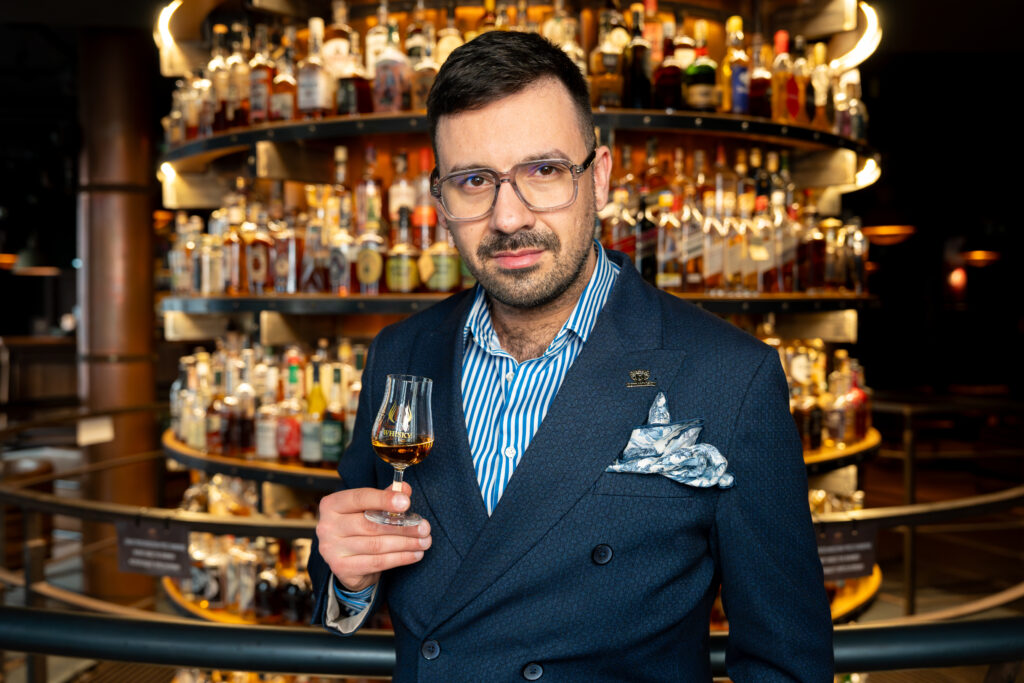
Text: Kamil Skoczek, Prestige Brands Ambassador